AMNESTY INTERNATIONAL ZIMBABWE 2025 MEDIA AWARDS
- BEST WRITTEN NEWS
Nominees: Thandiwe Garusa, Edgar Gweshe, and Nathan Guma
Special mention award: Thandiwe Garusa.
Runner-up: Edgar Gweshe.
Winner: Nathan Guma
- BEST BROADCAST NEWS (TV)
Nominees: Tamuka Charakupa, Paddington Muguti, Ruvimbo Nyikadzino, and Yeukai Tazira.
Special mention award: Tamuka Charakupa
Special mention award: Paddington Muguti
Runner up: Ruvimbo Nyikadzino
Winner: Yeukai Tazira
- BEST WRITTEN FEATURES.
Nominees: Moses Mugugunyeki and Lulu Brenda Harris, and Muchaneta Chimuka
Special mention award: Moses Mugugunyeki
Runner up: Lulu Brenda Harris
Winner: Muchaneta Chimuka
- BEST BROADCAST FEATURES (TV).
Nominees: Takudzwa Musukasa and Peace Patrick Musoro, and Lynette Manzini
Special mention award: Takudzwa Musakasa
Runner-up: Peace Patrick Musoro
Winner: Lynette Manzini
- BEST RADIO AND PODCASTS.
Nominees: Folake Makonese, Blessed Mhlanga, and Costa Nkomo
Special mention award: Folake Makonese.
Runner-up: Blessed Mhlanga
Winner: Costa Nkomo
- BEST DIGITAL CREATIVITY:
Nominees: Lynette Manzini and Sikhanyisiwe Sebatha
Runner-up: Lynette Manzini .
Winner: Sikhanyisiwe Sebatha
- BEST PHOTOJOURNALIST OF THE YEAR.
Nominees: Shorai Murwira and Emma Zihonye
Runner up: Emma Kudakwashe Zihonye
Winner: Shorai Murwira
- THE CANDLE AWARD FOR NEW JOURNALIST.
Nominees: Florence Tafadzwa Kayungwa and Thabisani Dube
Runner up: Florence Tafadzwa Kayungwa
Winner: Thabisani Dube
Full list of 2024 Winners
- Written News:
Runner Up: Miriam Magwanya and Evans Mathanda – Toilet Tyranny: HCC Workers Exploit Citizens.
Winner: Privilege Gumbodete – Zim performs dismally on human rights.
- Broadcast News (TV):
Runner Up: Andile Tshuma – Bulawayo’s Burning Problem- Richmond Landfill Site A Health Catastrophe.
Winner: Tall Grass Media / Michelle Gahadza: The role of women in preserving traditional knowledge.
- Written Features:
Runner Up: Tatenda Prosper Chitagu – Zimbabwe’s lithium liability.
Winner: Edgar Gweshe – Wetlands Protection In Harare Is A Human Rights Issue.
- Broadcast Features (TV):
Runner Up: Marvellous Matswimbo – Life after Masaya: The Family of Murdered Pastor Tapfumaneyi Masaya Speaks Out.
Winner: Trevour Sagota /ALZ FILM FELLOWS – A fragile existence.
- Radio and Podcasts:
Runner up: Brighton Ncube– Right to Documentation, struggles in accessing identity documents: Interview with Trinity Project Programs Manager.
WINNER: Blessed Mhlanga – Torture is a crime, end it now.
- Digital Creativity:
Runner Up: Brighton Ncube (CITE) – Torture, arbitrary arrests, treatment by security services in Zimbabwe
Winner: Bustop TV – Transcending the ballot box.
- Photojournalist of the Year.
Runner Up: Obey Sibanda – Images used for “Water Crisis in Bulawayo: Luveve Residents resort to shallow backyard wells.”
Winner: Emma Kudakwashe Zihonye – Images used for (The Harrowing Ordeal of Namatai Kwekweza: A Fight for Justice.)
- The Candle Award for New Journalist:
Runner Up: Privilege Gumbodete – Tortured unionist relives 35-day ordeal behind bars.
Winner: Darlington Gatsi –Inside Madzibaba Ishmael’s ‘Canaan’: Everything that happens here is God’s will – ‘disciples’ say.
- Outstanding Impact Award: Judges’ Choice
Lucy Selemani Yasini – Posthumous Award.

Lucy’s illustrious career in journalism spanned several institutions, including the Zimbabwe Broadcasting Corporation, the South African Broadcasting Corporation, and Studio 7. Throughout her tenure, she demonstrated unwavering dedication to fearless and unbiased reporting, undaunted by the challenges and dangers inherent to her profession. As a voice of reason and integrity, Lucy earned the respect and admiration of her peers. Female journalists, in particular, found in her a trustworthy confidante, willing to listen and offer guidance on sensitive matters, including sexual harassment. Though soft-spoken, Lucy’s words carried significant weight, as she consistently spoke truth to power and highlighted the challenges faced by journalists. Her legacy serves as a testament to the transformative power of courageous journalism. This award is given to her posthumously to honor her immense contributions.
Host – Nonkululeko Zandile Ndlovu

2024 Adjudicators
A distinguished panel of judges evaluated the submissions. Entries were assessed on the quality and depth of the reporting and storytelling, how they centered the voices and agency of the people and communities at the heart of the issue, and how they presented possible solutions. Below is the full list of the adjudicators.
- Lennox Mhlanga – a consultant communication specialist with 23 years of experience serving various organizations in the business, tertiary education, local authority, and civil society sectors. He has worked for the World Bank Group on the International Finance Corporation’s (IFC) support for the Government of Zimbabwe’s ‘Ease of Doing Business’ Initiative. Lennox is an Associate Consultant with the dynamic team at Magna Carta Reputation Consultants, and an adviser to Conservations Africa and Purple Room Consultancies in South Africa, and Efficacy Media in Zambia. He also lectures under the Marketers Association of Zimbabwe’s (MAZ) Business Institute and Bindura University of Science and Technology. He is a broadcaster of note, presenting and producing radio programmes with Capitalk100.4FM. He serves on the following boards: the Zimbabwe Centre for Media and Information Literacy (Chairman), the Zimbabwe Association of Business Communicators, and the Voluntary Media Council of Zimbabwe where he sits on the Media Complaints Committee. Currently runs Lenox Mhlanga & Associates as Managing Consultant. This is a boutique Public Relations agency that specializes in reputation management and media relations among other services.
- Kizito Sikuka – is a researcher, journalist, and policy analyst. He is the head of the Regional Economic Development Institute at the Southern African Research and Documentation Centre (SARDC).
- Anna Miti – Advocacy and communications specialist with a background in media, gender, and HIV/AIDS Advocacy. She has been a broadcast journalist for the past fifteen years, covering most of the beats in the newsroom including current affairs and politics, arts, gender, and even sports. She is a leader among health journalists in Zimbabwe, a member of the Federation of African Media Women in Zimbabwe, and a member of the Editor’s Forum on HIV/AIDS. She is also Pangaea Global AIDS Foundation-Pangaea Zimbabwe AID Trust (PZAT) – 2015 Fellow – 2015
- Tariro Makanga – a health communications specialist who has worked in the SRH advocacy and HIV/ADS prevention sector for over a decade.
- John Masuku – is a Media Consultant/Content Writer-Editor/Mentor. He writes articles and commentaries for different publications related to media trends, gender mainstreaming, training, and sustainability in Zimbabwe, Africa, and the world. He also edits some English Ndebele and Shona publications including translation roles.
Full video of the Award ceremony
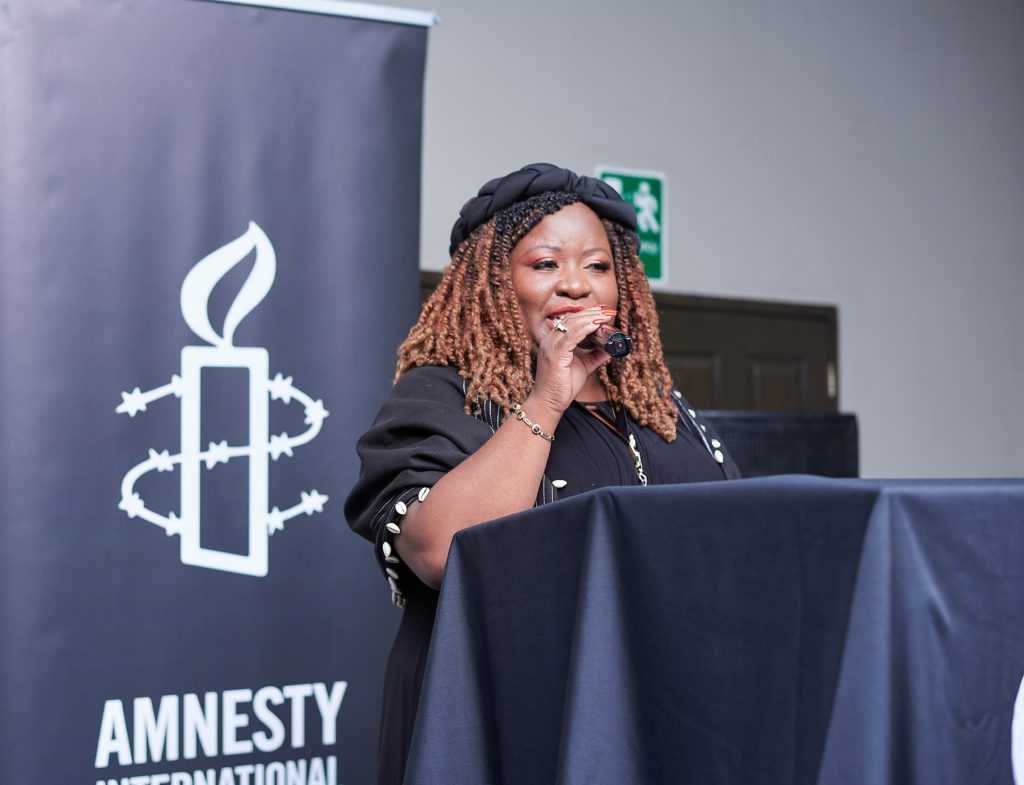
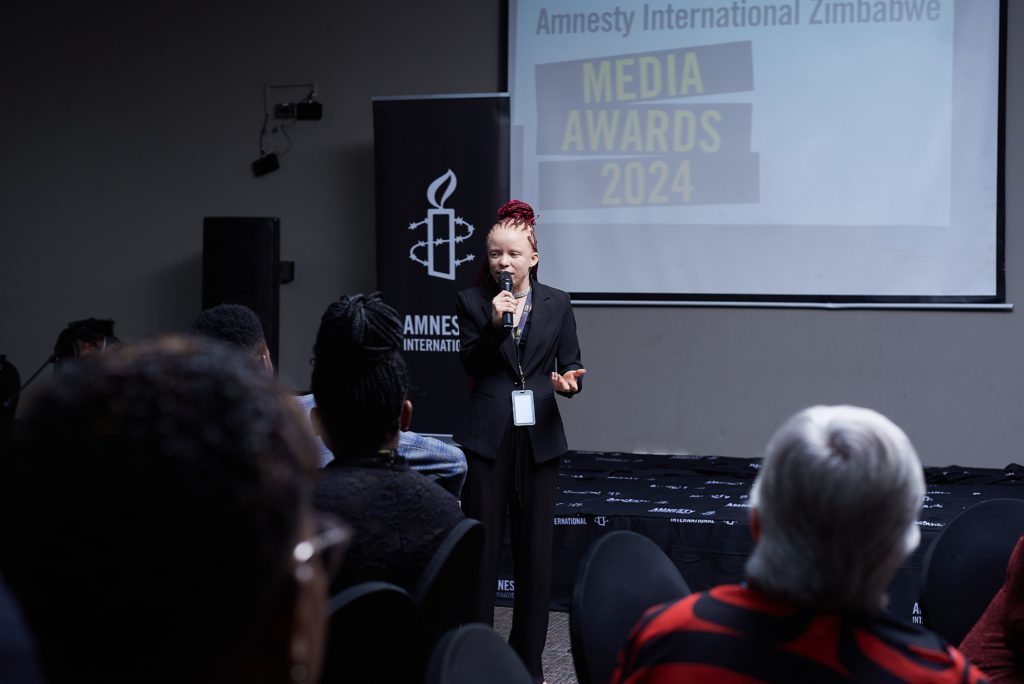
2024 Media Awards Gallery






Privacy Statement:
Amnesty International Zimbabwe will store and process your data to provide you with the information necessary to process your entry to the awards, and as a past entrant to inform you of future award events. You can opt out of receiving information about future awards at any time by emailing “unsubscribe” or calling us. Contact details will not be shared with any third parties without your agreement.